
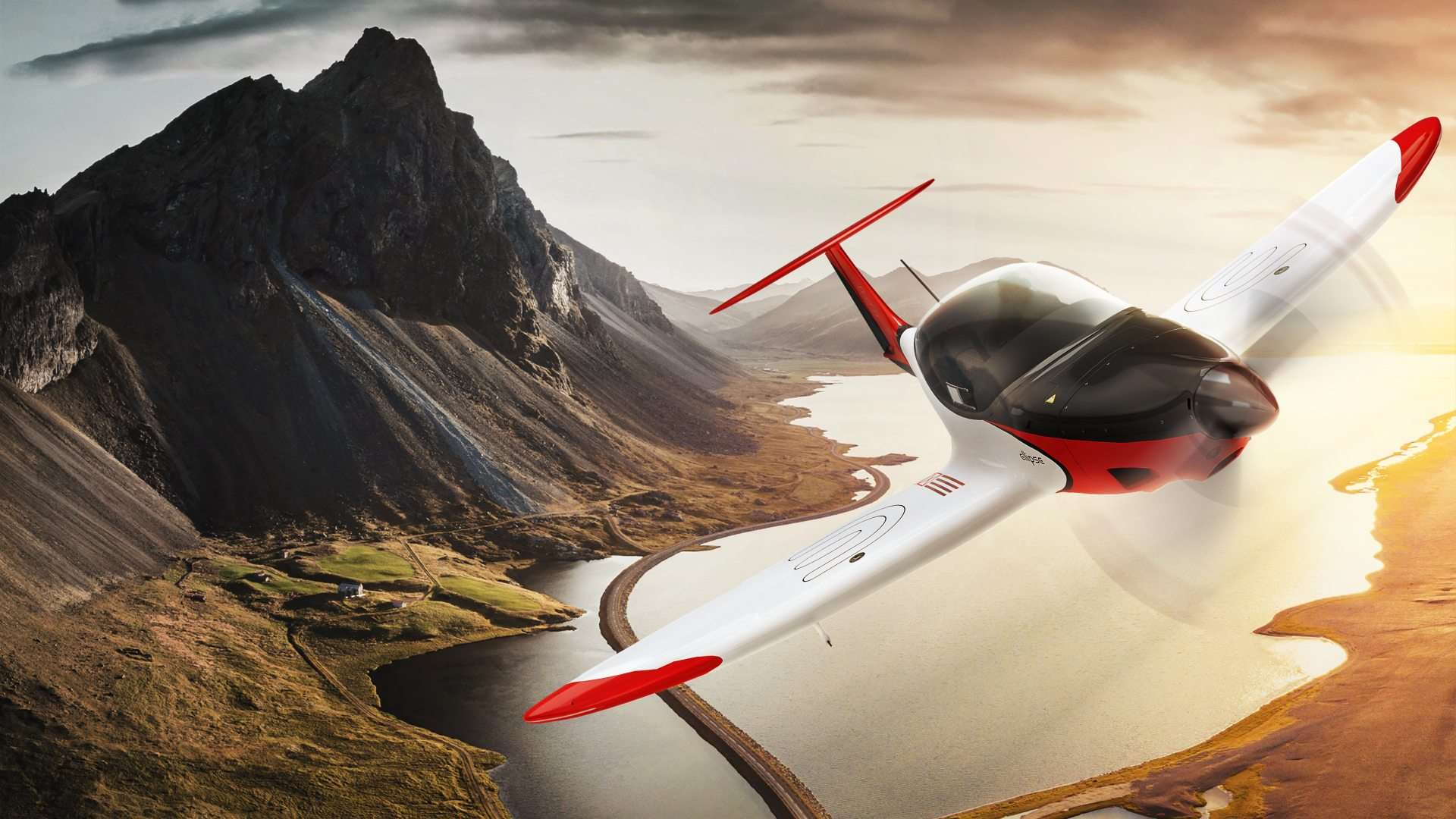
Light Aircraft with Ballistic Parachutes.
Safety shouldn't be optional. Whole-airframe Ballistic Recovery Systems (BRS, Galaxy GRS, and Magnum) turn worst-case engine-out, mountain, night, or inadvertent IMC emergencies into survivable vertical descents—giving you and your family genuine cross-country peace of mind.
How a Whole-Plane Ballistic Parachute Works
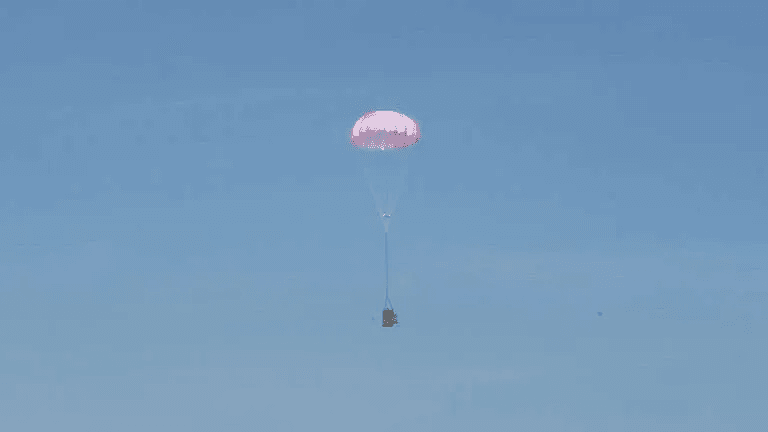
Unlike sport skydiving rigs that rely on airflow, an airframe ballistic recovery system (BRS, Galaxy GRS, or Magnum) uses a solid-propellant rocket to deploy a full-aircraft canopy in seconds—even near the ground or in an unrecoverable spin.
Cockpit Handle & Rocket Extraction
Pulling the red cockpit activation handle fires a solid-propellant rocket motor that launches the packed canopy clear of the tail and propeller within milliseconds—even in low-altitude or spin emergencies.
Kevlar Bridle & Controlled Inflation
High-tensile Kevlar risers deploy in sequence through a reefing slider, staging canopy inflation smoothly to keep deceleration forces well within airframe and occupant tolerance limits.
Structural Fuselage Mounting
Multi-point Kevlar straps anchor directly into primary carbon-fiber fuselage bulkheads and wing carry-through spars—such as the Ellipse Spirit's +12g-tested airframe—holding the cabin level under canopy.
Slow Vertical Descent vs. Forced Landing
Rather than attempting a 60+ knot off-field landing into trees, powerlines, or night terrain after an engine-out or IMC loss of control, the aircraft descends vertically while energy-absorbing gear cushions touchdown.
Peace of mind beyond glide distance
Modern Rotax engines are extraordinarily reliable, yet single-engine cross-country flying over mountain passes, coastal water, night terrain, or congested airspace always carries the theoretical risk of an off-airport landing. A whole-plane ballistic parachute changes the equation for four critical scenarios:
Parachute-Equipped Aircraft Lineup
Every aircraft below integrates a whole-airframe ballistic recovery parachute as standard equipment—backed by Alion Aviation's US delivery, DAR certification, transition training, and domestic spare-parts support.
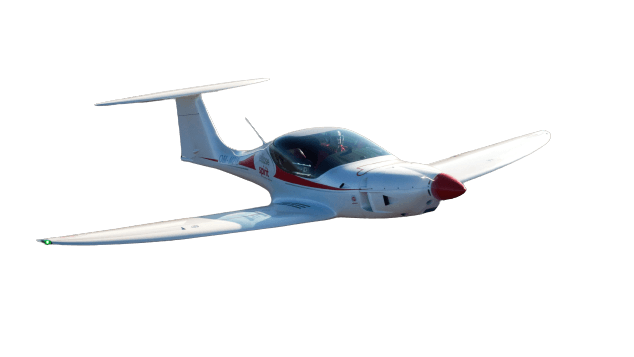
Ellipse Spirit
Spitfire-inspired carbon elliptical cruiser with 210 kts top speed, 33 kts stall speed, and 998 nm range.
- ✓Galaxy GRS 6 ballistic parachute standard (115+ lives saved)
- ✓Kevlar-reinforced cockpit + +12g tested airframe structure
- ✓350 ft takeoff & landing run with 3-position Fowler flaps
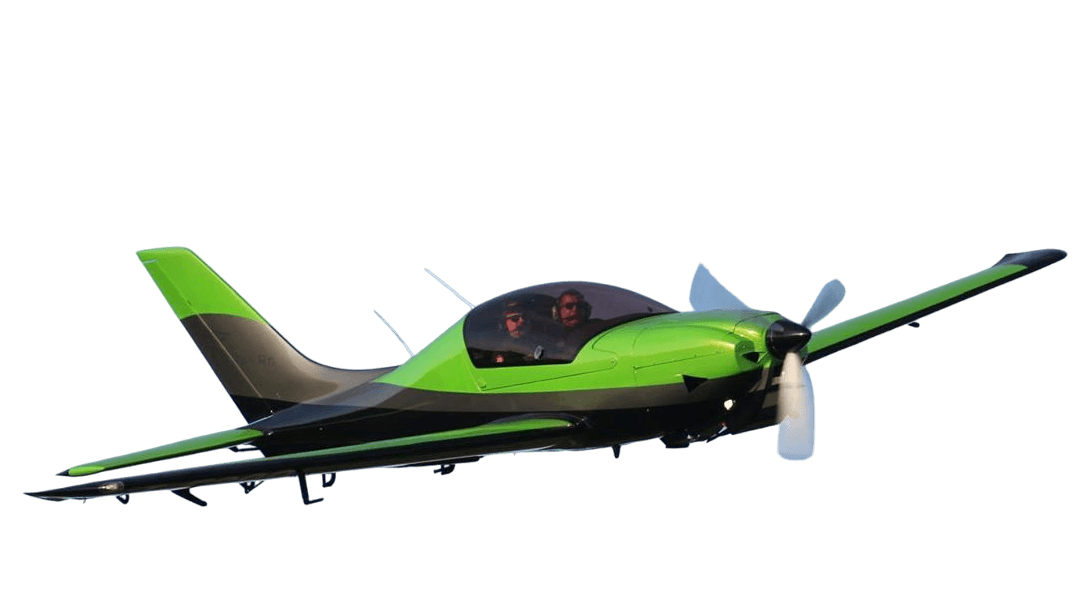
Promecc Freccia
Hand-finished Italian carbon-fiber retractable-gear cruiser combining cross-country speed with refined European ergonomics.
- ✓Standard whole-plane ballistic recovery parachute system
- ✓Carbon-fiber fuselage with >150 kt turbocharged cruise capability
- ✓Custom Garmin glass cockpit and retractable-gear efficiency
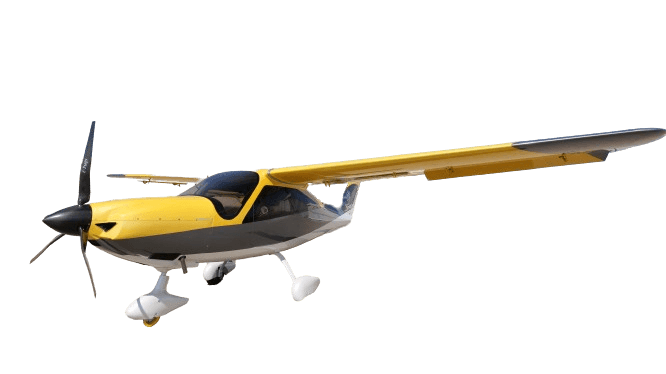
Promecc Pegaso
High-wing panoramic carbon STOL aircraft engineered for visibility, short unimproved strips, and effortless cabin access.
- ✓Integrated ballistic parachute + impact-absorbing cabin structure
- ✓Front-hinged access doors and unobstructed 360° sightseeing view
- ✓Capable STOL climb and short-field handling on grass or asphalt
Ballistic Parachute LSA vs. Cirrus SR20 / SR22
For decades, buyers seeking a factory plane with a parachute defaulted to a Cirrus. Today, modern European composite aircraft deliver whole-airframe parachute parity and cross-country speed at a fraction of the acquisition and fuel cost.
| Comparison Factor | Alion Parachute Fleet Ellipse Spirit / Promecc LSA | Legacy Certified Cirrus SR20 / SR22 |
|---|---|---|
| Whole-Airframe Parachute | Standard (Galaxy GRS 6 / BRS) | Standard (CAPS) |
| Acquisition Price (New) | Fraction of a new Cirrus ($200k–$330k class) | $650,000 – $1,100,000+ |
| Fuel Burn & Fuel Flexibility | ~4–9 gph (MOGAS 91+ Octane or 100LL) | 13–18+ gph (100LL AVGAS only) |
| Max Speed / Range | Up to 210 kts max · 998 nm range (Ellipse 915 iS) | 155–183 kts cruise · ~800–1,000 nm |
| Hourly Operating Cost | Dramatically lower (~$55–$85/hr direct) | $250–$400+/hr incl. reserves & hangar |
| Parachute Repack Cycle | ~6-year canopy repack · lower total cost | 10-year CAPS repack & rocket ($15k–$25k+) |
| Engine Overhaul / Support | Rotax 912 / 915 iS · 2,000-hr TBO, fast swap | Continental / Lycoming 6-cyl · $50k–$80k+ TBO |
| Runway & STOL Access | From 350 ft takeoff/landing · grass capable | 2,000+ ft paved runways preferred |
| Pilot License & Medical | Sport Pilot (Driver's License) or PPL / MOSAIC | Private Pilot Certificate + FAA Medical / BasicMed |
Disclaimer: All acquisition cost comparisons, fuel burn estimates, hourly operating figures, repack intervals, and performance specifications are indicative values for informational purposes only and may vary depending on aircraft configuration, optional equipment, regional fuel and maintenance rates, weight & balance, and operating conditions.
Both platforms integrate a rocket-deployed whole-airframe parachute plus modern Garmin glass avionics, envelope protection, and Smart Glide awareness.
Rotax 912 and 915 iS engines sip 4–9 gph of widely available unleaded MOGAS or 100LL—eliminating big-bore six-cylinder fuel bills and $60k+ cylinder/TBO shocks.
When 80%+ of your missions carry one or two people, stepping into an Ellipse Spirit or Promecc saves hundreds of thousands upfront without giving up parachute security.
Ballistic Parachute Questions Answered
When the pilot pulls the cockpit activation handle, a solid-propellant rocket motor fires and extracts the packed parachute canopy cleanly away from the aircraft structure in fractions of a second. A sequential slider controls inflation to minimize opening shock while high-strength Kevlar bridles transfer loads to reinforced airframe hardpoints, lowering the entire airplane and occupants safely under canopy.